الاستفسار لنا
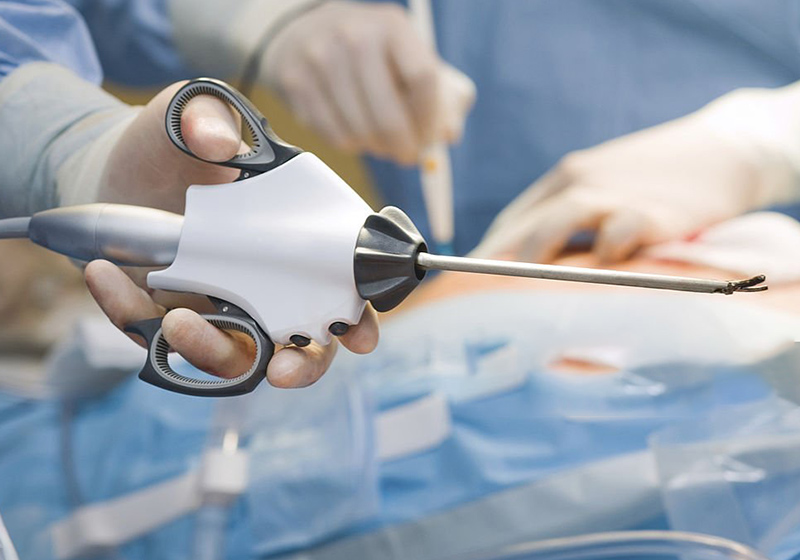
With the continuous advancement of minimally invasive surgical technology, ultrasonic scalpels are now widely used across general surgery, gynecology, urology, thoracic surgery, orthopedics, and other clinical fields. As one of the core components of an ultrasonic surgical device, the ultrasonic scalpel shaft not only transmits ultrasonic vibration but also directly affects the instrument's cutting efficiency, coagulation performance, service life, and clinical safety.
Mainstream ultrasonic scalpel products on the market today are generally manufactured with shafts made from Ti-6Al-4V ELI (Grade 23) medical titanium alloy. Compared with standard Grade 5 titanium alloy and stainless steel, Grade 23 medical titanium bar offers superior fatigue performance, higher ultrasonic energy transmission efficiency, and excellent biocompatibility, making it the material of choice for high-end ultrasonic surgical instruments.
However, choosing Grade 23 titanium alloy is only the first step toward guaranteeing product performance. The melting process, forging quality, microstructural uniformity, and batch-to-batch consistency of the titanium bar are equally critical to the reliability and service life of the ultrasonic scalpel shaft.
Traditional scalpels rely on mechanical force to cut tissue, whereas ultrasonic scalpels use high-frequency mechanical vibration to achieve both cutting and coagulation.
During operation, a piezoelectric transducer converts electrical energy into ultrasonic vibration at approximately 55-60 kHz, which is then transmitted through the titanium alloy shaft to the working tip.
Because the shaft must withstand millions, even tens of millions, of vibration cycles over its service life, the material must exhibit excellent high-cycle fatigue performance. High-cycle fatigue generally refers to a material's fatigue behavior after being subjected to 106 to 107 or more load cycles, which is particularly critical for medical devices such as ultrasonic scalpels that operate under sustained high-frequency vibration.
If the following defects exist within the titanium bar:
these locations become stress concentration points.
As ultrasonic vibration cycles continue, micro-cracks gradually propagate, eventually leading to high-cycle fatigue failure of the shaft rather than a single overload fracture.
For this reason, fatigue life is often more important than static strength for ultrasonic scalpel shafts.
Although Grade 5 (Ti-6Al-4V) and Grade 23 (Ti-6Al-4V ELI) belong to the same titanium alloy family, the medical device industry generally favors Grade 23 as the shaft material for ultrasonic scalpels, for three main reasons.
ELI stands for Extra Low Interstitial.
Compared with standard Grade 5, Grade 23 imposes stricter control over the following interstitial elements:
Lower interstitial element content improves fracture toughness, slows crack propagation, and significantly extends high-cycle fatigue life.
This performance advantage is especially important for ultrasonic scalpel shafts that must endure sustained 55-60 kHz high-frequency vibration, and is a key reason Grade 23 has become the preferred material for medical devices.
Titanium alloy has a low density and an excellent modulus-to-density ratio.
Compared with traditional materials such as stainless steel, titanium alloy transmits ultrasonic vibration with lower energy attenuation, allowing more ultrasonic energy to reach the working tip instead of being lost as heat within the shaft.
This translates into:
As a result, Ti-6Al-4V ELI has become one of the most widely used medical titanium alloys in ultrasonic scalpel manufacturing.
Grade 23 is an internationally recognized implant-grade medical titanium alloy, with excellent corrosion resistance, tissue compatibility, and long-term biological safety.
This material is currently widely used in:
Although ultrasonic scalpels are non-implantable devices, their working components come into direct contact with human tissue, making good biocompatibility an important consideration when selecting materials.
Grade 23 (Ti-6Al-4V ELI) and Grade 5 (Ti-6Al-4V) both belong to the Ti-6Al-4V titanium alloy family, and the main difference between them lies in the control of interstitial elements.
Grade 23 is the Extra Low Interstitial (ELI) version, with stricter limits on oxygen, nitrogen, carbon, and iron content, resulting in better fracture toughness, high-cycle fatigue performance, and biocompatibility, making it better suited for medical devices and implant-grade applications.
By comparison, Grade 5 offers higher strength and good corrosion resistance, but its fatigue life and fracture toughness are generally lower than those of Grade 23, so it is more commonly used in aerospace, industrial manufacturing, and some non-implantable medical devices.
For ultrasonic scalpel shafts that must withstand sustained 55-60 kHz high-frequency vibration, Grade 23 more effectively reduces the risk of fatigue crack propagation, thereby improving the long-term reliability and service life of the device.
| Comparison Item | Grade 23 (Ti-6Al-4V ELI) | Grade 5 (Ti-6Al-4V) |
|---|---|---|
| Interstitial element content | Lower | Higher |
| Fracture toughness | Excellent | Very Good |
| High-cycle fatigue performance | Excellent | Very Good |
| Biocompatibility | Implant grade | Good |
| Ultrasonic energy transmission | More stable | Good |
| Medical device applications | Ultrasonic scalpels, implants, surgical instruments | Industrial and some medical devices |
| Common standards | ASTM F136, ASTM B348 | ASTM B348 |
Overall, for medical devices such as ultrasonic scalpels and stapler shafts that endure sustained high-frequency vibration loads, Grade 23 medical titanium bar is generally the more suitable material choice, while Grade 5 can meet the needs of most applications in aerospace, chemical equipment, and general industrial components.
Many procurement professionals assume that as long as the material meets the ASTM F136 standard, it satisfies the requirements for medical device use.
In reality, meeting chemical composition requirements does not guarantee consistent fatigue performance.
The final performance of medical titanium bar depends not only on the alloy grade but also on the entire manufacturing process, including:
If melting quality control is inadequate, the material may still pass chemical composition testing while containing micro-segregation, internal inclusions, or micro-porosity, all of which reduce the shaft's fatigue life and long-term reliability.
Therefore, for medical device manufacturers, reviewing the material test certificate (MTC) alone is not sufficient to fully assess product quality. More attention should be paid to whether the supplier can provide:
This quality data more accurately reflects the microstructural uniformity and batch-to-batch consistency of the medical titanium bar, and is an important basis for ensuring the long-term stable performance of medical devices.
For high-end medical devices such as ultrasonic scalpels and staplers, material standards affect not only product performance but also medical device registration and quality management.
Medical Grade 23 titanium bar generally needs to comply with the following two international standards.
ASTM F136 specifies the chemical composition, mechanical properties, and technical requirements for implant-grade Ti-6Al-4V ELI (Grade 23) titanium alloy, and is a material standard widely adopted across the medical device industry.
Although ultrasonic scalpels are non-implantable devices, Grade 23's excellent fatigue performance, biocompatibility, and corrosion resistance make it widely used in ultrasonic scalpel shafts, stapler shafts, and other high-end medical device components.
ASTM B348 primarily applies to titanium and titanium alloy bar and billet products, specifying material condition, dimensional tolerances, and product requirements.
For medical titanium bar, ASTM B348 mainly governs product form, while ASTM F136 focuses on material performance. Medical device manufacturers therefore typically require suppliers to provide Grade 23 medical titanium bar that complies with both ASTM F136 and ASTM B348.
For medical device OEMs, material procurement should not focus solely on grade and price, but should comprehensively evaluate material consistency and the supplier's quality control capabilities.
The following aspects deserve particular attention:
For high-frequency vibration medical devices such as ultrasonic scalpels, these indicators are often more valuable reference points than material price alone.
For OEM manufacturers of ultrasonic scalpels, laparoscopic staplers, orthopedic instruments, and other high-end medical devices, the following aspects are worth evaluating when selecting a supplier:
Suppliers with complete production process control are generally better able to guarantee the microstructural uniformity, dimensional stability, and long-term supply consistency of medical titanium bar.
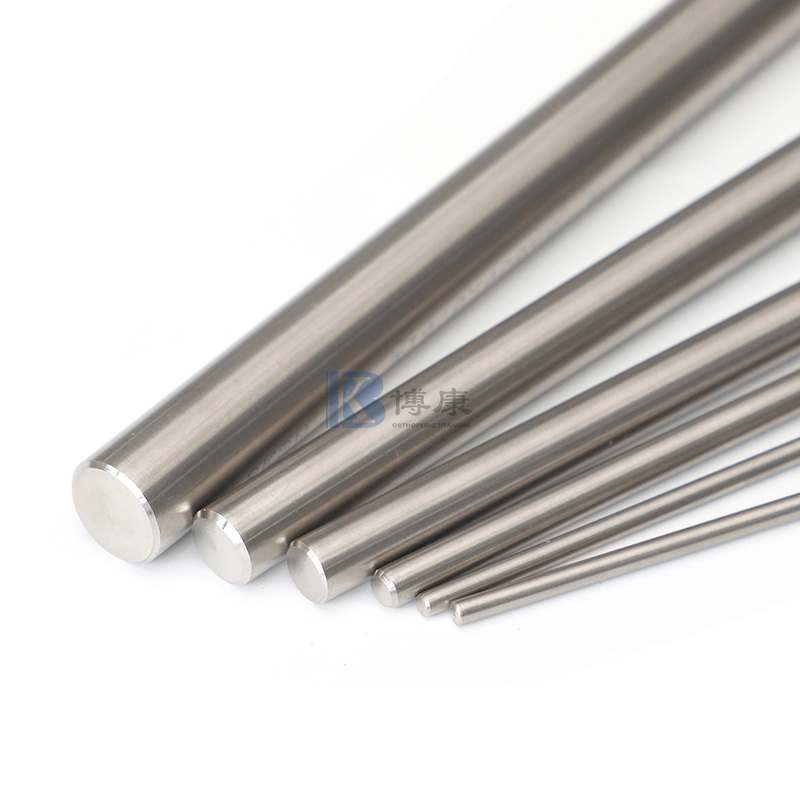
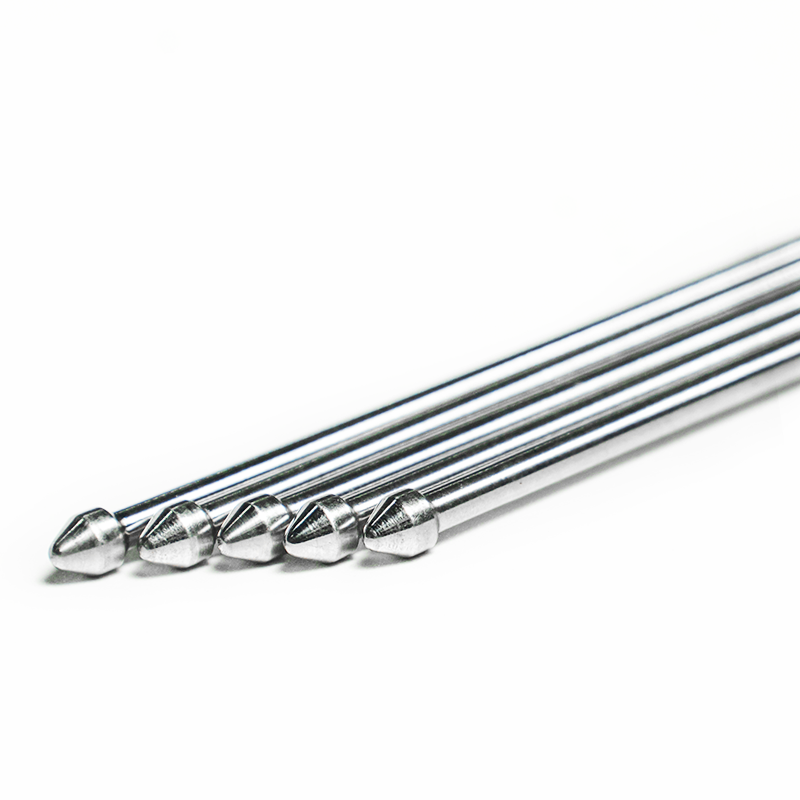
Ultrasonic scalpel shafts are typically machined from Grade 23 medical titanium bar ranging from Φ4.8 mm to Φ16.0 mm, with specific dimensions customized according to brand, transducer structure, and product design.
Beyond ultrasonic scalpels, Grade 23 medical titanium bar is also widely used in:
As ultrasonic surgical technology continues to advance, medical devices are trending toward being thinner, longer, more complex, and more precise, placing higher demands on the microstructural uniformity, fatigue performance, dimensional accuracy, and machining stability of medical titanium bar.
As minimally invasive surgical technology continues to progress, the performance requirements for ultrasonic scalpel shaft materials continue to rise.
For medical device manufacturers, selecting Ti-6Al-4V ELI (Grade 23) medical titanium bar is only the first step toward ensuring product performance. What matters more is ensuring the material has a stable microstructure, excellent fatigue life, a robust quality traceability system, and consistent batch-to-batch quality.
As ultrasonic surgical instruments continue to expand across general surgery, gynecology, orthopedics, ophthalmology, and other fields, high-quality medical titanium bar will play an increasingly important role in medical device manufacturing.
Mainstream ultrasonic scalpel products on the market are generally manufactured with shafts made from Ti-6Al-4V ELI (Grade 23) medical titanium alloy. This material offers excellent high-cycle fatigue performance, ultrasonic energy transmission efficiency, and biocompatibility, making it one of the most commonly used materials for ultrasonic scalpel shafts today.
Compared with stainless steel, titanium alloy has lower density, higher specific strength, higher ultrasonic energy transmission efficiency, and better corrosion resistance. Its excellent biocompatibility also makes it more suitable for medical devices. As a result, most ultrasonic scalpel shafts today are made from medical titanium alloy.
Yes. Grade 23 (Ti-6Al-4V ELI) imposes stricter control over interstitial elements such as oxygen, nitrogen, carbon, and iron compared with standard Grade 5, resulting in higher fracture toughness, longer high-cycle fatigue life, and better crack propagation resistance -- making it better suited for ultrasonic scalpel shafts that endure sustained 55-60 kHz high-frequency vibration.
Medical titanium bar for ultrasonic scalpels typically must comply with both of the following standards:
No. ASTM B348 mainly governs the product form and dimensional requirements of titanium bar, while ASTM F136 imposes stricter chemical composition and mechanical property requirements specifically for implant-grade Grade 23 titanium alloy. For medical device applications, both standards typically need to be satisfied simultaneously.
Ultrasonic scalpel shafts are typically machined from Grade 23 medical titanium bar ranging from Φ4.8 mm to Φ16.0 mm. Specific dimensions are customized according to product design, transducer structure, and customer requirements.
Meeting chemical composition requirements does not guarantee consistent fatigue performance. Vacuum melting process, ingot uniformity, forging ratio, heat treatment, grain structure control, and quality management level all influence the material's final performance. Medical device manufacturers should therefore comprehensively evaluate a supplier's manufacturing process, testing capability, and quality traceability system rather than relying on the material certificate alone.
Focus on whether the supplier holds ISO 13485 quality management system certification, has vacuum melting and forging capabilities, produces material meeting ASTM F136 and ASTM B348 standards, maintains a complete melt lot traceability system, has fatigue testing capability, and demonstrates stable batch consistency. These factors are critical to ensuring the long-term reliability of ultrasonic scalpel shafts.
Changzhou Bokang Special Materials Technology Co., Ltd. specializes in the research, development, and manufacturing of medical titanium and titanium alloy materials, providing high-quality medical titanium material solutions to medical device manufacturers worldwide.
The company operates a complete vacuum melting, forging, heat treatment, precision machining, and testing production system, and has been certified under the ISO 13485 medical device quality management system. Its product range covers Grade 1, Grade 2, Grade 4, Grade 5, and Grade 23 medical titanium materials, manufactured to international standards including ASTM F67, ASTM F136, and ASTM B348.
Bokang's medical titanium materials are widely used in ultrasonic scalpels, laparoscopic staplers, orthopedic instruments, dental implants, and other high-end medical devices. The company offers custom dimensions, complete material test certificates (MTC), test reports, and full melt lot traceability services, providing stable and reliable raw material support to medical device OEMs worldwide.
If you are looking for Grade 23 (Ti-6Al-4V ELI) medical titanium bar that complies with ASTM F136 and ASTM B348 standards, please contact Bokang Special Materials.
We can provide:
Contact us today to request product specification sheets, technical documentation, samples, or the latest quotation.
حقوق النشر © 2024 Changzhou Bokang Special Material Technology Co., Ltd.(SA) كل الحقوق محفوظة.
مصنعي قضبان التيتانيوم النقية المستديرة المخصصة الخصوصية